Monday, May 19, 2014

DHC FRS 01: Dating And Mating Across Cultural Lines (blog #4)

Instructor: Dr. Lalia Hekima Kiburi
Spring Quarter 2014
Blog Question #4

Dating Across Religious Lines

By Bob Strauss

Here’s modern life for you: Only a few generations ago, a devout Presbyterian would think long and hard before bringing home an (gasp!) Episcopalian to meet her folks. Today, though, interfaith dating has become so common that your new love interest would have to snack on sprouted gerber-daisy seeds (as per the scriptures of the First Intergalactic Church of Macrobiology) to so much as raise your friends’ eyebrows. 


That said, though, dating a person with nonmainstream beliefs does present its own set of challenges, such as how to field questions from curious relatives and how to settle in your own mind just how “out there” (or intergalactic) a belief system you’re willing to put up with. Here’s what the experts have to say:

Be honest with yourself. First, see if you can accept your new partner’s belief system. “The key is to figure out whether you disagree with his or her beliefs or disapprove of those beliefs,” says Micah Sachs, managing editor of InterfaithFamily.com. “If you disapprove, it’s unlikely you’ll be able to find long-term happiness with this person. If you disagree, then there is the possibility of a good outcome. A successful relationship doesn’t require two people to agree on everything; it’s more important that they share values, goals and chemistry.” But if, when you are truly honest with yourself, you find that you disapprove, then you are probably best parting ways.
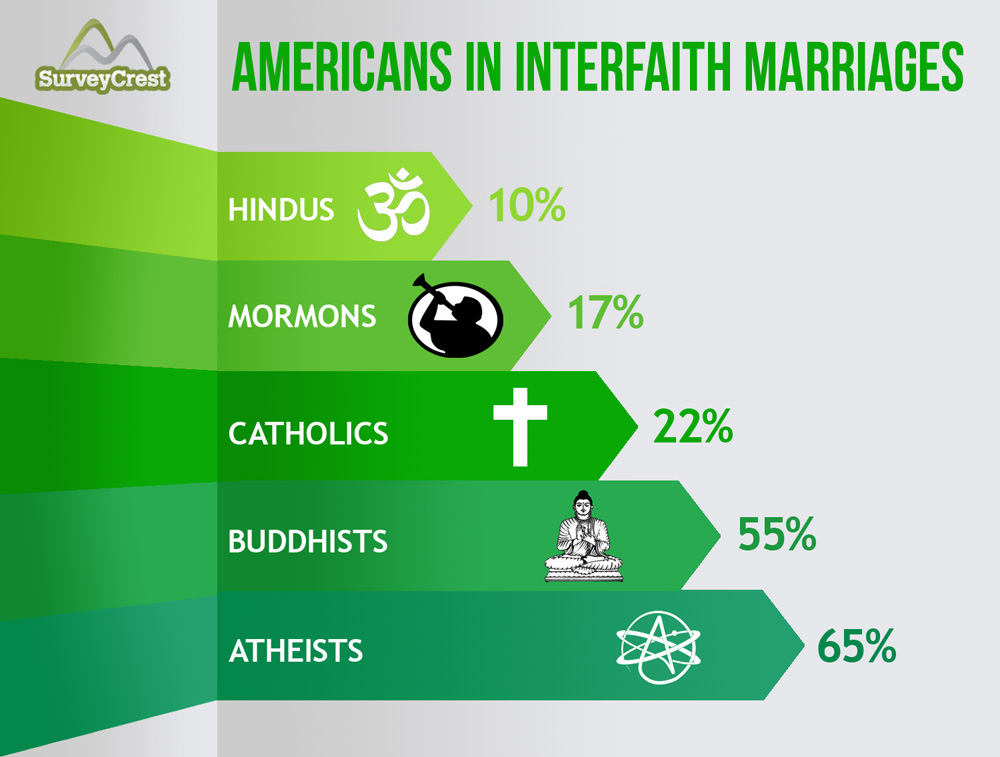

Prepare your family. If you’re terrified of what Mom and Dad will think about your Scientologist girlfriend, Dr. Wayne (a psychologist who’s currently dating someone with nontraditional beliefs and would rather not divulge his last name when speaking of the matter) says: “If your partner’s beliefs have the potential for misunderstanding, tell your family privately and one-on-one. Don’t put your prospective mate in the position of having to defend him- or herself!” On the other hand, Dr. Wayne adds, “A person with nontraditional beliefs has probably gotten used to inconsiderate people” and is likely to be unfazed by skeptical questions from your grandmother. But do make sure you have your date’s back if a relative goes for the jugular; a simple, “How about that economy, huh?” should change the topic of conversation quickly.

Be discreet about the details. The odds are you aren’t seeing your new beau because he belongs to the League of the Infernal Wombat (though, hopefully, you aren’t simply tolerating him despite that fact). That’s why Micah Sachs advises, “When you introduce your new partner to your friends, ask yourself this question: What details would you divulge about yourself if you were meeting people for the first time? You probably wouldn’t talk about your religion or your particular eating habits, so why should you reveal these things about your new sweetie?”

Don’t assume religion always has to be a source of conflict… “The word ‘nontraditional’ is a matter of perspective,” Dr. Wayne says. “A Moslem dating a Jew might, or might not, be as problematic as a Wiccan dating a Southern Baptist. The issue really comes down to the respect people have for each other, regardless of their beliefs. Two people of the same religion can be more disrespectful of each other than a man and a woman who come from very different belief systems.” 


…but don’t assume religion won’t cause any conflict, either. Explains Dr. Wayne: “If you can’t live with a person of radically different beliefs without making huge accommodations on his or her behalf, be careful. This may be more an issue of power and control than beliefs. If your evangelical boyfriend can’t enjoy a quiet evening without discussing his religion, that is a problem.”
Remember, other people will pick up on your discomfort. “If you’re uncomfortable with your partner’s choices, your anxiety will spread among family and friends like the measles,” says therapist Dr. Stephanie Buehler. “You should be able to give a 30-second ‘elevator speech’ about your partner’s beliefs that puts him in a positive light. It might go something like this: “Fred has very strong spiritual beliefs. In fact, he is high priest in a Wiccan coven, and his writing has appeared in some impressive Wiccan publications.” If you can say that comfortably and deal with the raised eyebrows you may see in response, you’re well on your way to comfortable couplehood.
 ___________________________________
After reading the above short article, stop and reflect on its information.  Imagine that you are strongly attracted to a person from a religious or spiritual background that is different from your own.  The attraction is mutual and you both decide to seriously date.

1.     Given what you have learned in our course to date, what will you do to prepare your deeply Evangelical parents when you introduce them to your Muslim girlfriend?

2.     What will be your carefully chosen words and attitude?


Tuesday, May 6, 2014

DHC FRS 01: Dating And Mating Across Cultural Lines (blog #3)


Instructor: Dr. Lalia Hekima Kiburi
Spring Quarter  2014
Blog Question #3


SHOCK! L.A. CLIPPERS OWNER TO GF: DON’T BRING BLACK PEOPLE TO MY GAMES…INCLUDING MAGIC JOHNSON: L.A. Clippers owner Donald Sterling told his GF he does NOT want her bringing black people to his games … including Magic Johnson … and it’s ALL on tape. TMZ Sports has obtained audio of Sterling making the racist declaration during a heated argument on April 9th with V. Stiviano … after she posted a photo on Instagram posing with Magic. Sterling rails on Stiviano — who ironically is black and Mexican — for putting herself out in public with a black person (she has since taken the pic down). But it doesn’t end there. You have to listen to the audio to fully grasp the magnitude of Sterling’s racist worldview. Among the comments: — “It bothers me a lot that you want to broadcast that you’re associating with black people. Do you have to?” (3:30) — “You can sleep with [black people]. You can bring them in, you can do whatever you want. The little I ask you is not to promote it on that … and not to bring them to my games.” (5:15) — “I’m just saying, in your lousy f******* Instagrams, you don’t have to have yourself with, walking with black people.” (7:45) — “…Don’t put him [Magic] on an Instagram for the world to have to see so they have to call me. And don’t bring him to my games.” (9:13) Sterling has a documented history of allegedly racist behavior — he’s been sued twice by the federal government for allegedly refusing to rent apartments to Blacks and Latinos. He was also sued by former Clippers exec Elgin Baylor for racial discrimination — though a jury was ultimately not convinced and shot down Baylor’s case. Sterling has been separated from his wife Shelly for years. She remains a key player in running the team and sources tell us she’s “mortified” by Sterling’s comments.

1) After reading and learning from our seminar presentations on mating and dating across cultural lines so far this quarter, what advice would you give Mr. Sterling?
2) And what advice would you give to his now estranged girlfriend?

Saturday, April 26, 2014

DHC FRS 01: Dating And Mating Across Cultural Lines (blog #2)

Colorblind Ideology is a Form of Racism
Instructor: Dr. Lalia Hekima Kiburi
Spring Quarter  2014
Blog Question #2


Blindness means being unable to see.
A colorblind approach allows us to deny uncomfortable cultural differences.
Published on December 27, 2011 by Monnica T. Williams, Ph.D. in Culturally Speaking

What is racial colorblindness?
Racial issues are often uncomfortable to discuss and rife with stress and controversy. Many ideas have been advanced to address this sore spot in the American psyche. Currently, the most pervasive approach is known as colorblindness. Colorblindness is the racial ideology that posits the best way to end discrimination is by treating individuals as equally as possible, without regard to race, culture, or ethnicity.
At its face value, colorblindness seems like a good thing — really taking MLK seriously on his call to judge people on the content of their character rather than the color of their skin. It focuses on commonalities between people, such as their shared humanity.

Problems with the colorblind approach--Racism? Strong words, yes, but let's look the issue straight in its partially unseeing eye. In a colorblind society, White people, who are unlikely to experience disadvantages due to race, can effectively ignore racism in American life, justify the current social order, and feel more comfortable with their relatively privileged standing in society (Fryberg, 2010). Most minorities, however, who regularly encounter difficulties due to race, experience colorblind ideologies quite differently. Colorblindness creates a society that denies their negative racial experiences, rejects their cultural heritage, and invalidates their unique perspectives.

Let's break it down into simple terms: Color-Blind = "People of color — we don't see you (at least not that bad ‘colored' part)." As a person of color, I like who I am, and I don't want any aspect of that to be unseen or invisible. The need for colorblindness implies there is something shameful about the way God made me and the culture I was born into that we shouldn't talk about. Thus, colorblindness has helped make race into a taboo topic that polite people cannot openly discuss. And if you can't talk about it, you can't understand it; much less fix the racial problems that plague our society.

Colorblindness is not the answer

If you can't see it, you can't fix it.
Many Americans view colorblindness as helpful to people of color by asserting that race does not matter (Tarca, 2005). But in America, most underrepresented minorities will explain that race does matter, as it affects opportunities, perceptions, income, and so much more. When race-related problems arise, colorblindness tends to individualize conflicts and shortcomings, rather than examining the larger picture with cultural differences, stereotypes, and values placed into context.

Given recent issues relating to hate speech and freedom of speech rights among UCLA college students observing dating and mating across cultural lines: http://www.ryot.org/offensive-flyer-at-ucla-calls-asian-girls-who-date-interracially-honkie-white-boy-worshipping-whores/563413—how would you argue to support a UCLA student embracing a colorblind ideology?  How would you argue to oppose a colorblind ideology in UCLA’s highly diverse educational setting?

Friday, April 18, 2014

DHC FRS 01: Dating And Mating Across Cultural Lines (blog #1)

Instructor: Dr. Lalia Hekima Kiburi
Spring Quarter 2014
Blog Question #1

As we learned in our first presentation, some African American or Black women have a particular resistance to interracial dating and mating.  Read the paragraph below and:
1) State whether you agree or disagree with Iainad’s opinion on how parents should accept interracial dating and mating. 
2) How does this writer’s belief on interracial dating and mating challenge the sociological concept of “nation building?”

A Different Take On Interracial Relationships: Questioning The Motives Of Our Mates And Ourselves
By lainad on February 08, 2010: BlogHer Original Post
Many of us live in diverse communities where we interact with a culturally diverse group of people, but because I work in the downtown core in a large, metropolitan city, I understand that for some their racial tolerance has a short expiry date, ending at 5pm on Friday afternoons. Once they get off the commuter train and reach their homes in the suburbs, that tolerance goes out the window. But in this day and age, I'm of the opinion that anyone who has issues with their children dating or marrying across racial lines should have raised them in a forest or under a rock.

Monday, March 10, 2014

DHC FRS 01: Dating and Mating Across Cultural Lines (blog #8)

Instructor: Dr. Lalia Hekima Kiburi
Winter Quarter  2014
Blog Question # 8


In conducting a textual analysis of Smith and Hattery’s book: Interracial Relationships in the 21st Century, many social issues come under investigation as they influence interracial and inter-faith couples.   Examples of relevant issues are attraction, family, religion, lesbian and gay male couples creating a different marriage and family paradigm, mixed-race children, domestic violence, etc.  After viewing a YouTube presentation on the value of qualitative research in sociology below:


 Choose a significant issue in studying inter-faith and interracial dating and mating patterns.  Create a guiding research question informing the field of straight and gay interracial and inter-faith relationships.

Tuesday, March 4, 2014

#itooamharvard and the Black Bruins


Sometimes when we see people of color at top institutions, such as Harvard or even our own UC Davis, we think "they made it," that they are the exception, and are somehow immune to the pervasive racism and structural discrimination which affects so many in our nation.


We couldn't be more wrong. Check out these two videos, the blog, http://itooamharvard.tumblr.com/ and this article http://www.insidehighered.com/news/2013/11/11/students-video-leads-discussion-race-ucla. Even for those of us who are aware of these problems, it's still mind blowing. When only 48 of the 2,418 entering male students at UCLA are black (total campus representation of 3.3% compared to 13.1% of the national population) - and people don't see the problem with that,  we need more wake-up calls like this.

Monday, March 3, 2014

DHC FRS 01: Dating and Mating Across Cultural Lines (blog #7)

Instructor: Dr. Lalia Hekima Kiburi
Winter Quarter  2014
Blog Question # 7

Dating across religious lines
By Bob Strauss
Don’t assume religion always has to be a source of conflict… “The word ‘nontraditional’ is a matter of perspective,” Dr. Wayne says. “A Moslem dating a Jew might, or might not, be as problematic as a Wiccan dating a Southern Baptist. The issue really comes down to the respect people have for each other, regardless of their beliefs. Two people of the same religion can be more disrespectful of each other than a man and a woman who come from very different belief systems.”

…but don’t assume religion won’t cause any conflict, either. Explains Dr. Wayne: “If you can’t live with a person of radically different beliefs without making huge accommodations on his or her behalf, be careful. This may be more an issue of power and control than beliefs. If your evangelical boyfriend can’t enjoy a quiet evening without discussing his religion, that is a problem.” 
___________________________________
In analyzing the issues that both challenge and benefit individuals who date and mate across interfaith lines, Bob Strauss, the author of the excerpts from his article above (full text on our SmartSite Resource page), discusses realistic and healthy expectations   After reading Chapter 7: Unequally Yoked: How Willing Are Christians to Engage in Interracial and Interfaith Dating and reflecting on Strauss’ thoughts---what advice would you give to couples creating a relationship across interfaith lines?

Sources: match.com--Bob Strauss is a freelance writer and children’s book author who lives in New York City. He’s also written the Dinosaur guide on About.com, the online information network owned by the New York Times.


Sunday, February 23, 2014

DHC FRS 01: Dating and Mating Across Cultural Lines (blog #6)

Instructor: Dr. Lalia Hekima Kiburi
Winter Quarter  2014

Blog Question #6


In the book titled: In Love, But Worlds Apart: Insights, questions, and tips for the intercultural couple, the authors Grete Shelling and J. Fraser Smith argue that intercultural dating and mating partners can not depend on love alone to create and sustain a successful relationship.   According to Shelling and Smith, certain conditions must be met in order to enhance their unity.  These conditions are:

·      “partners must become reasonably more and more mature
·      [be] willing and able to think and to talk about their cultural differences that include manners, values, worldview, holidays and other customs
·      learn to understand and respect [their] differences
·      find solutions to their conflicts and discover enough things they can celebrate and enjoy together”

Shelling and Smith help partners to “think through vital topics of differences they must face eventually, such as:

·      “their differing family backgrounds
·      [differing] expectations
·      [differing] tastes
·      future country or place of residence”

Given all that you have learned from course readings, presentations, and discussions to date, which of the above issues would be of greatest concern to you in analyzing the social practice of dating and mating across cultures.  Why?  

Saturday, February 15, 2014

Please Watch This.

If you haven't seen this yet, please watch it. That anyone, for even a minute, should have to feel ashamed of who they are and what they feel is one of the greatest crimes our society has committed, and we can not remedy this ill soon enough.

A round of applause for Ellen Page. 


Friday, February 7, 2014

DHC FRS 01: Dating and Mating Across Cultural Lines (blog #4)

Instructor: Dr. Lalia Hekima Kiburi
Winter Quarter  2014
Blog Question # 4


During our last class presentations, one of your classmates introduced the concept of homonormativity (see the website below for a detailed definition) as a social practice that impacts the process of same sex dating and mating across cultural lines.  Homonormativity does not “assume an individual is gay, but it assumes that queer people want to be just like heteronormative people.” Reflecting on course readings and discussion questions addressed during our presentations, in what ways can you substantiate this thesis?  In what ways would you dispute it?


http://dismantlinghomonormativity.weebly.com/what-is-homonormativity.html

Friday, January 31, 2014

DHC FRS 01: Dating and Mating Across Cultural Lines (blog # 3)

Instructor: Dr. Lalia Hekima Kiburi
Winter Quarter  2014
Blog Question # 3


The socialization of human behavior via television is an ongoing subject of research.  Miscegenation, defined as sexual relations or intermarriage between races, is currently featured in Scandal--one of the most highly rated television shows debuting in 2012.  This series is about an interracial affair between a European American, married, republican president and a beautiful woman that is African American, single, republican, and head of a Washington D.C crisis management firm.   The love affair reveals a powerful personal, political and sexual reality.  Utilizing the concept of miscegenation and course material to date, do you think that this television series will promote greater acceptance of interracial dating and mating specifically between African American women and European men? Why or why not?

Friday, January 24, 2014

Racial Profiling by NYPD


I really encourage everyone to watch this video. It seems a little long at first, but if we are to work towards an equal society, we need to be informed. Being informed sometimes means hearing things that we do not want to hear.

Thursday, January 23, 2014

DHP FRS 01: Dating and Mating Across Cultural Lines (blog #2)

Instructor: Dr. Lalia Hekima Kiburi
Winter Quarter  2014
Blog Question # 2

Cognitive dissonance is a social psychological theory defined as: "the state of having inconsistent thoughts, beliefs, or attitudes, esp. as relating to behavioral decisions and attitude change."  In other words: when your beliefs are inconsistent with your reality.  Utilizing course material (lectures, presentations, readings) discuss how you could utilize cognitive dissonance theory to explain the appeal and the challenges faced by couples in an interracial relationship?


sources:

Wednesday, January 15, 2014

DHP FRS 01: Dating and Mating Across Cultural Lines (blog #1)

Instructor: Dr. Lalia Hekima Kiburi
Winter Quarter  2014
Blog Question # 1


NUT TO KARDASHIAN: I’LL KILL YOU: Kim Kardashian reportedly filed a police report after a teen called her a “n****r lover” and said “I will kill you, slut” during an altercation outside of a Beverly Hills medical building. As the reality-TV star tried to enter the building, the 18-year-old initially appeared to be trying to help her get past photographers, but then began using racial and homophobic epithets. Kardashian then called fiancé, Kanye West, who allegedly punched the man. West is now a subject of a criminal battery investigation, in addition to charges he faces for an earlier altercation at Los Angeles International Airport.
___________________________________________________

In sociology ethnic and racial slurs are defined as “ethnophaulisms”.  Utilizing the sociological term ethnophaulism and the ideology of “nation building”, what advice would you give to Kim Kardashian and Kanye West regarding their dating and mating across cultural lines in the 21st century?   (Do not be influenced by the media’s use of the label “nut”.)